
Play and Creativity Are Key To Your Personal and Spiritual Growth
Play and creativity shape how you experience and expand consciousness. When you let yourself explore ideas freely, experiment without pressure, and approach life with curiosity, you make room for growth that feels both natural and meaningful.
Engaging in creative activities and adopting a playful mindset help you connect with your inner self and support your spiritual and emotional development.
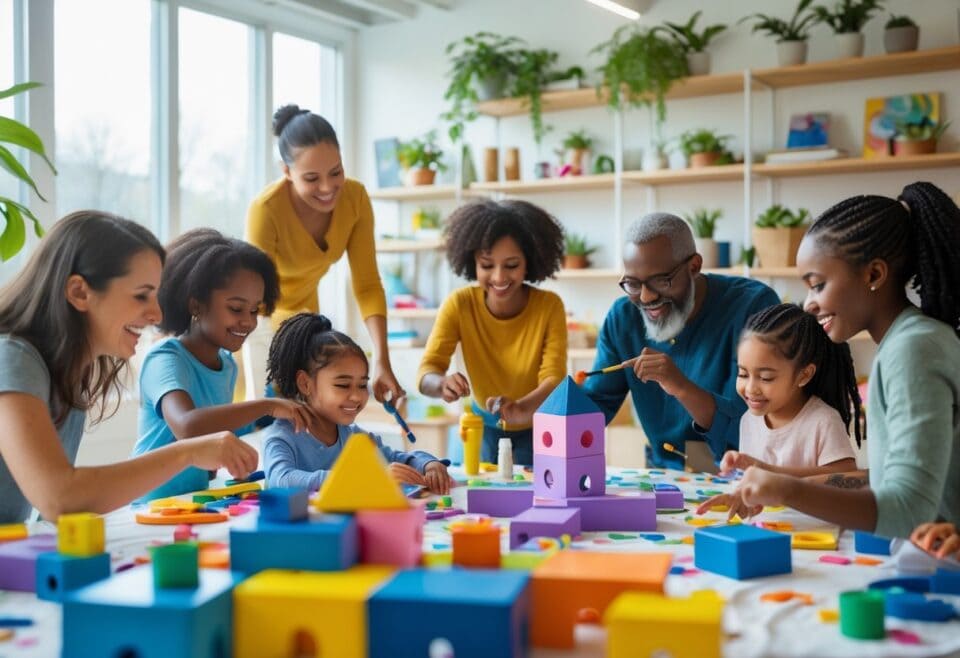
You experience play not just as recreation but as a state of openness that encourages insight and self-discovery. Creative expression—whether through art, problem-solving, or just letting your imagination run—activates awareness and brings a kind of balance between thought and emotion.
This process deepens your understanding of yourself. It also strengthens your connection to the world around you.
As you learn to approach challenges playfully, you build resilience and flexibility.
This attitude transforms everyday experiences into opportunities for learning and renewal. Your actions start to align with a deeper sense of purpose and conscious evolution.
Understanding Play and Creativity in Consciousness Evolution
Play and creativity shape how you explore ideas, express emotions, and connect with deeper awareness. Through open-ended activity and imaginative thought, you can expand perception, loosen up rigidity, and find a better balance between intellect and intuition.
Defining Play and Creativity
Play involves freely chosen actions driven by curiosity and enjoyment, not just external goals. It lets you experiment, take risks, and explore without worrying about failure.
This freedom nurtures spontaneity and flexibility in both thought and behavior. Creativity is the ability to generate novel and useful ideas.
When you engage creatively—through art, problem-solving, or even scientific inquiry—you’re blending imagination with some structure. It’s a dynamic process, not a static one.
| Concept | Core Feature | Function in Growth |
|---|---|---|
| Play | Intrinsic motivation, freedom | Encourages exploration and adaptability |
| Creativity | Novel idea generation | Transforms insight into tangible outcomes |
| Playfulness | Lighthearted mindset | Reduces stress, increases openness |
Together, these traits help you approach life with curiosity and resilience. That’s pretty essential for conscious development, if you ask me.
Historical Perspectives on Playfulness
Across cultures, play has always been more than just recreation—it’s a path to insight. Ancient philosophers like Plato saw play as crucial for learning and moral education.
In Eastern traditions, playful spontaneity often symbolized harmony with natural flow, or Tao. Modern psychology picked up on this, too.
Researchers have noticed that playfulness supports cognitive flexibility, emotional regulation, and social connection. In scientific and artistic fields, playful experimentation has sparked major discoveries and innovations.
Honestly, it’s clear that playfulness isn’t just for kids. It’s a mature capacity that helps you adapt, imagine, and evolve. It bridges structured effort with creative freedom.
The Link Between Play, Creativity, and Spiritual Growth
When you engage in play and creative expression, you enter a state of focused presence. This state quiets self-judgment and opens access to intuition and inner awareness.
Spiritual traditions often describe this as aligning with your authentic self. Activities like painting, music, or just letting your imagination roam can become forms of meditation that integrate mind and spirit.
Playfulness helps you release control and enter flow—a mental state where insight just seems to arise out of nowhere. In this way, creativity and play act as catalysts for expanding consciousness and deepening your sense of connection with life.
The Science of Play: Foundations for Personal Development
Play activates brain systems that support learning, creativity, and emotional balance. It strengthens neural connections, improves social understanding, and increases your ability to adapt to change.
Through playful experiences, you train your mind to respond with curiosity and flexibility rather than stress or rigidity. That’s a skill worth having.
Neuroscientific Insights into Play
When you play, your brain lights up regions linked to motivation, emotion, and planning. Research in affective neuroscience shows that play triggers the release of dopamine and other neurotransmitters that boost mood and focus.
In both humans and animals, playful behavior stimulates growth in the prefrontal cortex, the part of your brain responsible for decision-making and problem-solving. Studies suggest these neural benefits support lifelong learning and creativity.
Play also helps regulate the stress response system. Regular playful activity lowers cortisol levels and promotes resilience.
You could think of play as mental exercise that strengthens the pathways connecting emotion, movement, and thought. This integration improves your ability to stay calm, attentive, and open to new experiences.
Play’s Role in Emotional and Social Growth
Play lets you express feelings safely and understand others’ emotions. When you engage in cooperative or imaginative play, you practice empathy, negotiation, and self-regulation.
These skills form the foundation of emotional intelligence. Children and adults both get a lot out of this process.
For example, playful interactions with peers or family members encourage trust and strengthen social bonds. In animals, too, young mammals use play to learn social cues and group cooperation.
Key emotional benefits of play:
- Builds confidence and self-awareness
- Enhances empathy and perspective-taking
- Reduces anxiety and supports positive mood
By allowing emotional expression without judgment, play helps you connect more authentically with others and with yourself.
Play and Cognitive Flexibility
Play trains your brain to think in new ways. When you explore, improvise, or create, you shift mental patterns and strengthen cognitive flexibility—the ability to adapt to changing situations.
Free play, in particular, encourages experimentation without fear of mistakes. This process improves problem-solving and supports creative insight.
You learn to see multiple solutions instead of getting stuck on just one answer. Researchers link playful thinking to better executive functioning, including planning and working memory.
By engaging in playful activities—drawing, building, storytelling, whatever works—you exercise the same mental skills that support innovation and adaptability in daily life.
Creative Play as a Catalyst for Innovation
Engaging in creative play encourages curiosity, flexibility, and experimentation. It helps you connect ideas in new ways, supports risk-taking without fear of failure, and builds the mental habits that lead to innovative thinking.
How Creative Play Fosters Innovation
Creative play lets you explore ideas freely without strict goals or evaluation. This freedom promotes original thinking and helps you discover unexpected connections between concepts.
When you play, you enter a relaxed mental state that supports imagination and insight. Researchers have found that a playful mindset increases your ability to generate novel solutions because it reduces self-criticism and encourages experimentation.
In workplaces, playful environments often lead to greater collaboration and idea-sharing. Simple activities—like brainstorming games or role reversals—can spark innovation by lowering barriers between people and encouraging diverse perspectives.
A table of benefits of creative play in innovation:
| Aspect | Effect on Innovation |
|---|---|
| Emotional safety | Encourages risk-taking |
| Curiosity | Expands idea generation |
| Collaboration | Enhances shared creativity |
| Flexibility | Supports adaptive thinking |
The Creative Process in Playful Contexts
The creative process really thrives when you treat work as play. In playful contexts, you focus on enjoyment and discovery rather than immediate results.
This shift allows your mind to explore possibilities without pressure. You move through stages of exploration, experimentation, and refinement more fluidly when you’re playful.
This approach mirrors how kids learn—by trying, failing, and adjusting. The same pattern supports innovation in adults, too.
Play also helps you enter a “state of flow,” where time feels suspended and ideas just seem to pop up. In this state, your attention deepens, and creative insights often appear spontaneously.
When you view challenges as opportunities for playful experimentation, you strengthen your creative process. Innovation starts to feel like a natural outcome of your mindset.
Divergent Thinking and Problem Solving
Creative play enhances divergent thinking, the ability to produce many possible solutions to a problem. Instead of fixating on one right answer, you explore multiple directions and combinations.
Activities that involve humor, storytelling, or improvisation stimulate this kind of thinking. They train your brain to associate freely and to connect unrelated ideas.
By engaging in playful problem-solving, you learn to approach obstacles with curiosity rather than frustration. This attitude expands your problem-solving capacity and helps you adapt to new situations.
Through consistent creative play, you strengthen the mental flexibility needed for innovation and sustained personal growth.
Pretend Play and Imagination: Building Blocks of Inner Alignment

When you let your imagination run wild through creative play, you start to tap into deeper layers of thought and feeling. Exploring roles, ideas, and symbols can strengthen self-awareness and shed light on how your mind creates meaning.
Pretend Play in Childhood and Adulthood
Pretend play kicks in early, right when you start acting out stories or pretending objects are something else. It’s a major way kids build creativity, emotional smarts, and social awareness.
Research points out that kids who dive into pretend play usually pick up stronger problem-solving and communication skills. That’s a pretty big deal if you ask me.
But honestly, adults aren’t off the hook. Creative play—think storytelling, acting, or improv—can still spark flexible thinking and help with emotional regulation.
Letting yourself imagine freely is a way to practice seeing the world from all sorts of angles. It’s surprisingly refreshing.
| Benefit | Description |
|---|---|
| Emotional Growth | Helps you process feelings safely through symbols and stories |
| Cognitive Flexibility | Encourages adaptive thinking and innovation |
| Social Understanding | Strengthens empathy and cooperation through role exchange |
Pretend play isn’t just for kids; it’s a tool for self-reflection and mental balance at any age. No shame in that.
Imaginative Exploration and Self-Discovery
Imagination gives you a little space to wander beyond what’s routine. When you play creatively, you get to experiment with new perspectives and behaviors—no real-world pressure, just curiosity.
This kind of playful exploration can help you spot your personal values, motivations, and emotional needs. It’s almost like holding up a mirror to your mind.
You might find yourself expressing imagination through drawing, writing, or just zoning out in a daydream. Each creative act reflects something from inside, giving shape to what’s usually hidden.
If you pay attention to patterns in your creative moments, you’ll notice beliefs and desires you might’ve missed. It’s not always comfortable, but it’s real.
Try quick creative exercises—like imagining what could’ve happened if you’d made a different choice in your day. These little experiments show how flexible your thinking can get when you loosen up and play a bit.
Role-Playing for Personal Transformation
Role-playing is a nifty way to step into other identities and see how you react in a safe space. Whether you’re in a group or just reflecting on your own, taking on new roles lets you test out different ways of thinking and acting.
Guided role-play in therapy or personal growth can help you face tough stuff through symbolic action. You might rehearse responses, explore fears, or finally let out emotions that are hard to express directly.
By playing with roles, you learn to balance wild imagination with self-awareness. That balance supports inner alignment—linking creative expression with intention, so you can act more authentically in daily life.
Cultivating Playfulness for Spiritual and Emotional Wellbeing
Playfulness really does wonders for emotional balance, creativity, and self-awareness. When you approach life with curiosity and a bit of openness, you get better at adapting, reducing stress, and connecting with your inner self—whatever that means to you.
Benefits of Embracing a Playful Mindset
Honestly, having a playful mindset just makes things easier. You stay flexible, handle challenges with less panic, and look at experiences with curiosity instead of judgment.
This kind of openness helps with emotional and spiritual growth, letting you try on new perspectives without feeling boxed in. It’s not magic, but it’s close.
Play brings you back to that sense of wonder you had as a kid. When you let yourself experiment, mess up, and even laugh at your own mistakes, you shake off tension and let joy sneak in.
Key benefits of playfulness include:
| Benefit | Description |
|---|---|
| Stress Reduction | Light-hearted activities calm the nervous system and lower emotional strain. |
| Creativity Enhancement | Play stimulates imagination, helping you find innovative solutions. |
| Mindful Presence | Engaging in play keeps you focused on the present moment. |
Playfulness and Emotional Resilience
Playfulness builds up emotional resilience. When you see challenges as opportunities to explore, you start valuing growth over perfection—something I still struggle with, honestly.
This attitude makes you less rigid and helps you regulate emotions more steadily. It’s not always easy, but it’s worth practicing.
Shared play—laughing, creating, or just being silly with others—deepens empathy and social connection. Trust and emotional safety grow from these moments, and they really help you handle stress in relationships.
Trying a new hobby or playing a quick game can be a reminder that not everything has to be controlled. Sometimes, letting go is the best move you can make.
Integrating Play into Daily Practices
You don’t need a total life overhaul to bring more playfulness into your routine. Start small—look for little moments that spark curiosity or creativity.
Short breaks for drawing, dancing, or coloring mindfully can make a difference. It doesn’t have to be complicated.
Practical ways to integrate play:
- Take a short walk and notice details in your surroundings.
- Use humor to ease tension in conversations.
- Turn routine tasks into mini challenges or games.
These habits help you stay balanced and grounded, turning even the most ordinary moments into chances for renewal. It’s not always obvious, but it adds up.
Creativity and Innovation Across Species: Lessons from Animals
Honestly, you can learn a ton about creativity and adaptability just by watching animals. The way they use play and problem-solving to survive is kind of inspiring.
Their actions show how flexible thinking and curiosity can spark innovation—and even nudge evolution along.
Animal Play and Evolutionary Adaptation
Play is a big deal for animals. Young mammals like lions, dolphins, and primates use playful behavior to practice motor skills, figure out social roles, and test emotional responses.
All that playing strengthens their ability to adapt when things change. It’s like nature’s boot camp.
Researchers like Patrick Bateson and Marc Bekoff noticed that animals who play more often develop sharper problem-solving skills. Play even boosts neural development, which means better coordination and cognitive flexibility.
On an evolutionary level, play gives animals a safe space to experiment. Sometimes, the new behaviors they stumble on during play end up being survival strategies down the line.
So, creativity isn’t just a human thing—it’s something we share with other species. That’s pretty wild, right?
Examples of Innovation in Animal Behavior
Animals get creative when they’re solving real-world problems. Crows use tools to grab insects or drop nuts on roads for cars to crack open.
Octopuses have been spotted using coconut shells as makeshift shelters. Chimpanzees tweak sticks to fish for termites or scoop up honey.
Innovation often comes from curiosity and a stubborn streak. Some species even pass down these clever tricks, leading to simple cultural transmission—like dolphins teaching younger ones to use sponges as tools.
These examples show that creativity doesn’t need language or abstract thinking. It’s just flexible, persistent problem-solving in action.
Honestly, you could argue these behaviors are proof that flexible thinking and experimentation offer real evolutionary advantages.
Implications for Human Consciousness Evolution
Watching animal creativity can give you a new angle on your own growth. Just like animals, you can use play and creative expression to stretch your awareness and adaptability.
Playful engagement fires up your imagination and loosens up rigid thinking. It’s a way to link instinctive curiosity with conscious reflection.
If you see creativity as a natural process—not just a rare gift—you’ll start to notice it everywhere, in yourself and others. Personal development becomes more about exploring and adapting than ticking boxes.
Practical Strategies to Enhance Play and Creativity in Everyday Life
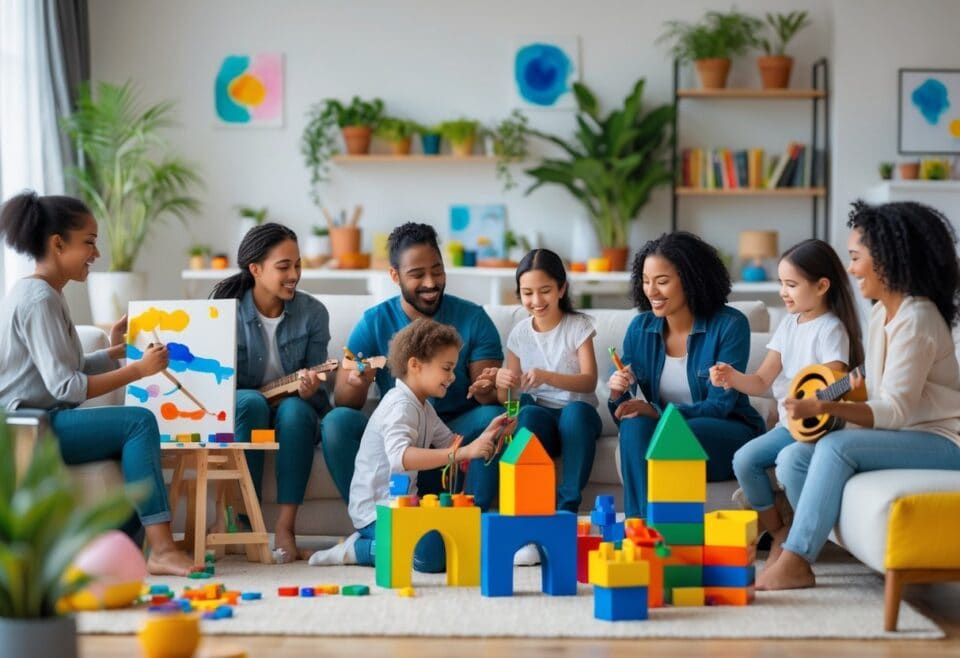
You can absolutely boost your creativity and sense of play with a few intentional tweaks to your daily routine. These strategies help you carve out supportive spaces, express ideas without fear, and ditch habits that kill curiosity.
Creating Environments That Foster Play
A supportive environment invites you to explore without worrying about results. Set aside a spot—a desk, a garden patch, a corner of your living room—where you can try things out with open-ended materials.
Examples of helpful materials:
| Type | Purpose |
|---|---|
| Art supplies | Encourage visual imagination |
| Building tools | Support hands-on problem-solving |
| Natural items | Inspire sensory awareness |
Keep things flexible. Swap out materials now and then to stay curious.
Try to cut down on distractions, especially screens, since they tend to suck you in. Natural light, comfy seating, and a calm setting also make it easier to focus on the creative process.
Encouraging Creative Expression
Let creative expression grow by giving yourself permission to explore ideas without judging them. Try activities that mix structure and freedom—drawing, writing short stories, or making up music on the fly.
Set aside time each week for unstructured play. Group projects, new hobbies, or revisiting childhood favorites can all work.
Prompts or challenges help too, like “What can I make with just three colors?” or “How can I tell a story without words?”
Share what you make with others. Getting feedback and collaborating can spark new ideas and make you more confident in your creativity.
Overcoming Barriers to Playfulness
Barriers to play often creep in as self-criticism, time pressure, or just plain fear of messing up. Maybe you know the feeling—every little mistake feels like a neon sign pointing at your flaws.
But what if mistakes were just information? Not proof that you can’t do it, but, well, just part of the process. Try to see errors as steps along the way rather than the end of the road.
Helpful approaches:
- Set realistic goals for creative projects.
- Schedule short, regular sessions instead of long, infrequent ones.
- Practice mindfulness to stay present during play.
Letting curiosity take the wheel instead of judgment—now that’s when creativity can really breathe. Playfulness isn’t something you just switch on; it’s more like a muscle you build, with a little patience and a willingness to wander off the beaten path.
Prague, October 10, 2025
All images are artificial generated by Dirk Bosman and licensed under Creative Commons BY-NC 4.0