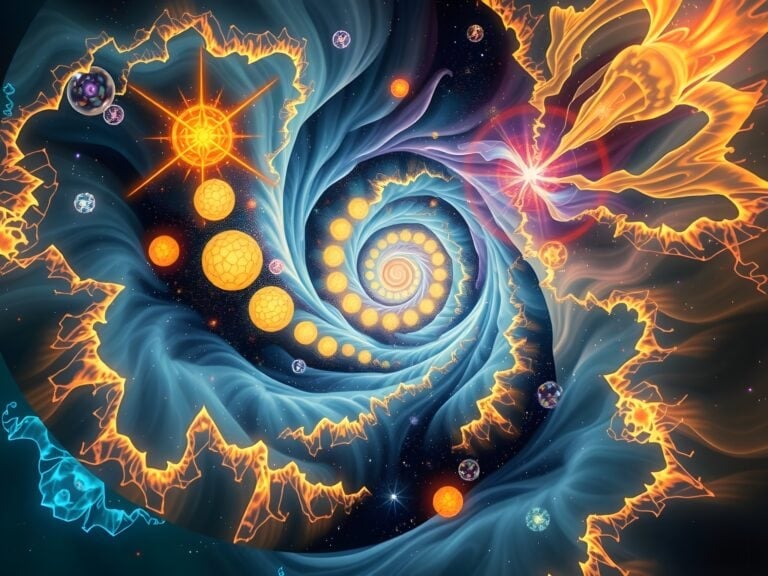
Explanation of planes of reality, the planes of existence, and there role in every day life
When you dive into Seth’s sessions, you’re stepping into a framework that really messes with what most of us call “reality.” Seth describes existence as layered, where physical life is just one plane out of many.
Each plane has its own flavor, its own way of being, but they’re all tied together through consciousness. You live in more than one dimension at once, shaping and perceiving reality through both physical senses and inner awareness.

These ideas force you to see yourself as more than just a body moving through time. Seth says the physical world is a learning ground, while the inner planes show you the deeper patterns behind thought, emotion, and creation.
You start noticing how beliefs and expectations sneak into every layer of experience, from your daily grind to those more mysterious, non-physical realms.
The self, in Seth’s view, is a continuous presence that isn’t fenced in by physical limits. The soul—or entity—moves across these planes, gathering knowledge and shaping realities by making conscious choices.
It’s a lot to take in, but understanding these planes can help you see your role as a creator, not just someone along for the ride.
Core Concepts of Seth’s Planes of Reality

Seth’s material paints existence as layered and interactive, not some rigid, fixed thing. You’re living in multiple dimensions of consciousness, and your beliefs and expectations shape how you experience them.
Getting a grip on these planes can help you realize how your inner self is always busy co-creating physical reality.
The Nature of Reality
Seth says physical reality is just one branch of a much broader, multidimensional system. You experience this world through your senses, but it’s just the surface—what he calls camouflage reality.
Underneath, there’s a tangled web of energy and consciousness that forms everything you see, touch, and feel.
Time and space, according to Seth, are just tools your mind uses to keep things organized. They’re handy for learning how thoughts and emotions become events, but beyond them, all moments exist at once.
When you expand your awareness, your consciousness can move through these moments more freely. It’s wild to think about, isn’t it?
Every choice you make shapes the version of reality you occupy, while other possibilities keep humming along in parallel planes.
The Role of Beliefs and Expectations
Seth emphasizes that your beliefs and expectations serve as blueprints for your experiences. The truth you hold dear influences the unfolding of events around you.
If you’re convinced life is limited or unsafe, you’ll probably bump into situations that seem to confirm that story.
You create patterns of experience by running the same thoughts and emotions on repeat. Shift those inner patterns, and—eventually—your outside world starts to shift, too.
It’s not like flipping a switch, but more like watching energy gather around your focus until it takes shape.
Seth teaches that beliefs are creative acts. When you really get that, you start to take responsibility for your reality instead of feeling like a victim of random luck.
Try watching how your expectations influence your daily interactions, your health, or even the weird little opportunities that pop up. It’s more obvious than you’d think.
Levels of Consciousness and Inner Selves
The Seth Material describes each person as a multidimensional entity with several layers of consciousness. There’s an outer self that handles daily life, and an inner self that taps into deeper knowledge and nonphysical dimensions.
These levels aren’t at odds—they work together. The inner self whispers through intuition, dreams, and impulses, nudging your outer awareness along.
If you tune out this inner voice, you’ll probably feel off or disconnected. Seth explains that your entity—the bigger piece of your soul—lives beyond time and space, experiencing many realities at once, including other incarnations.
When you sync up with your inner self, you get access to a broader understanding and can steer through physical life with a bit more clarity, maybe even some purpose.
Understanding Physical Reality as a Plane

Physical reality works as a shared field, where your inner thoughts and emotions become visible and measurable. It’s like a mirror, reflecting your mental and emotional activity through events, objects, and circumstances so you can observe your own patterns and choices.
Materialization of Thoughts and Emotions
According to Seth, physical reality isn’t separate from your inner life. It’s the outer expression of what you think, feel, and believe.
Thoughts and emotions act as blueprints—what you focus on with real intensity starts to materialize in physical form.
This doesn’t happen overnight. It’s more like planting a seed and then tending to it. Your repeated attention and expectation nurture it until, eventually, it shows up in your world.
Look at your own life: constant worry can draw in stressful situations, while consistent optimism tends to attract helpful outcomes.
Once you spot this link, you start to see how your imagination and inner dialogue really shape the world around you.
Circumstances and Personal Experiences
Your circumstances are a mirror for your inner state. Every event, relationship, or challenge gives you feedback about what you’re holding in your mind.
Recurring patterns? That’s just your repeated mental habits playing out in the world.
Seth’s take is that you create your own reality by making choices at both conscious and subconscious levels. You don’t control every last detail, but your reactions, expectations, and interpretations shape how you experience what happens.
| Inner Focus | Likely Outer Reflection |
|---|---|
| Fear and doubt | Limiting or stressful situations |
| Confidence and curiosity | Supportive opportunities |
| Resentment | Repeated conflict |
| Gratitude | Cooperative outcomes |
Notice the connection, and you might find yourself tweaking your focus to bring about more balanced and satisfying experiences.
Physical Reality as a Learning Environment
Seth describes physical reality as a structured environment for growth. It’s designed to give you clear feedback about how your thoughts and emotions play out in form.
Through this feedback, you learn to take responsibility for your inner life. Life isn’t a test, really—it’s more of a learning system.
Each circumstance invites you to refine your understanding of how consciousness and matter interact. Mistakes? They’re just lessons in creative use of thought and emotion.
You’re doing this every day. Shift your attention, and your experiences slowly start to change. Physical reality becomes a hands-on classroom for exploring how imagination and belief shape the world you live in.
Exploring Inner Reality and Non-Physical Planes
You exist in more than just the visible world, whether you realize it or not. Seth’s early sessions talk about inner dimensions where thought, belief, and intention are the real building blocks of physical experience.
Understanding these unseen layers helps you notice how consciousness operates beyond what we usually perceive, and how your soul functions across different planes of existence.
Characteristics of Inner Reality
Inner reality—sometimes called Framework 2 in Seth Speaks—is the mental and spiritual environment that supports physical life. It’s not a place, exactly, but a dynamic field of consciousness where all possibilities exist.
Time and space don’t really pin you down in this inner world. Events can connect across past, present, and future, and thoughts and emotions work as creative forces, shaping what eventually pops up in your physical surroundings.
You tap into inner reality through intuition, dreams, and imagination. These inner senses are like extra tools for seeing beyond the five physical senses.
Pay attention, and you’ll start to get insights into where your experiences come from and the patterns steering your daily life.
| Aspect | Physical Reality | Inner Reality |
|---|---|---|
| Nature | Material, visible | Non-physical, mental |
| Rules | Time and space | Timeless, fluid |
| Access | Five senses | Inner senses |
Interaction Between Inner and Outer Worlds
Your outer world is always echoing what’s going on inside. Seth says consciousness is constantly moving between these planes, translating inner impulses into physical events.
Beliefs, expectations, and emotions act as signals, shaping how your experiences unfold. Change your inner focus, and—slowly but surely—what you run into in daily life starts to change, too.
This isn’t a one-way street. What happens in the physical world also influences your inner state, teaching you how thoughts and feelings create results.
You could look at it as a feedback system, nudging you toward more awareness and responsibility for your reality.
Want to see it in action? Try journaling about repeated experiences, tracking emotional patterns, or just noticing how your expectations seem to nudge outcomes.
The Soul and the Entity
Seth describes the soul, or entity, as a bigger consciousness you’re a part of. Your current personality is just one expression of this larger being.
The entity exists in many dimensions at once, guiding each personality toward growth and understanding. It’s kind of like a network of selves, each learning through different experiences.
These selves share knowledge through inner channels that operate beyond physical time. Your soul stays aware of all its expressions, using dreams, intuition, and inspiration to send you guidance.
When you start to recognize this connection, it’s easier to trust that your life has purpose and continuity—way beyond a single lifetime.
In Seth’s view, death isn’t the end. It’s just a shift in focus within the same greater consciousness that keeps on exploring and creating.
The Role of the Self: Entities and the Soul

You exist as more than your physical body.
Your consciousness actually extends beyond time and space, forming part of a greater, multidimensional system of awareness.
This view describes a layered self that’s connected to both personal identity and a larger spiritual source.
The Structure of the Self
Seth describes the self as a multi-level system made up of the outer ego, the inner self, and the entity or soul.
- The outer self handles daily life and physical perception.
- The inner self directs energy, organizes experience, and shapes physical reality.
- The entity represents your complete identity that exists across lifetimes.
Each level is in constant communication with the others.
The inner self acts as a bridge, translating the entity’s broader awareness into physical form.
You might experience this as intuition, dreams, or those sudden flashes of insight that seem to come from nowhere.
So, you’re not just limited to a single lifetime or personality.
Instead, you’re one expression of a much bigger consciousness that keeps learning through many realities.
The Eternal Nature of the Soul
Seth explains that the soul, or entity, is eternal and creative.
It doesn’t age or die, but expresses itself through countless personalities and experiences.
Each life adds a little more understanding to the whole.
You can think of the soul as a central consciousness gathering wisdom from its many selves.
Every thought, emotion, and action contributes to its growth.
The soul doesn’t judge; it learns through contrast and experience, which is honestly kind of a relief.
In this view, reincarnation isn’t about punishment or reward.
It’s just a natural process of exploration.
Time, as you know it, is part of the physical system, but all incarnations exist simultaneously from the entity’s perspective.
Connection to God and Greater Reality
Seth’s material places the entity within a larger spiritual framework.
Each entity is part of All That Is, a term Seth uses for the creative source—what most folks would just call God.
You’re not separate from this source.
Through your inner self, you participate in creation by forming reality from thought and emotion.
This makes you both a creation and, well, a creator.
The connection to God isn’t distant or hierarchical.
It’s direct and continuous, expressed through your own consciousness.
When you act with awareness and compassion, you align more closely with this greater field of being.
Implications for Daily Life and Creation

Seth’s ideas on reality creation suggest that your thoughts and emotions directly influence your surroundings.
By understanding how beliefs shape events, you can make deliberate choices that (hopefully) lead to more balanced experiences and healthier relationships.
Applying Seth’s Teachings to Everyday Circumstances
Seth taught that you create your own reality through the interaction of thoughts, emotions, and expectations.
Your daily circumstances reflect your inner beliefs, whether they’re conscious or not.
You can start by observing repeated patterns in your life.
When you notice similar outcomes, try looking for the belief behind them.
For example, if you often face financial stress, maybe you hold a belief that money is scarce or hard to earn.
A practical method is to keep a brief journal of your reactions and events.
Note how your mood or assumptions might precede what happens next.
Over time, this awareness helps you replace limiting thoughts with more supportive ones.
| Practice | Purpose |
|---|---|
| Journaling experiences | Identify recurring beliefs |
| Observing emotional reactions | Track cause and effect |
| Setting clear intentions | Direct focus toward desired outcomes |
Transforming Reality Through Beliefs
According to Seth, beliefs act as filters through which you interpret and form reality.
Changing your outer world starts with adjusting these inner filters.
You don’t have to force change; just question what you assume to be true.
When you challenge a belief—like “I never succeed”—you weaken its influence.
Replacing it with something more balanced, like “I can learn from each attempt,” opens up new possibilities.
Seth emphasized that belief transformation isn’t just wishful thinking.
It takes consistent awareness and emotional honesty.
Each belief carries emotional energy that shapes how you see events.
By aligning beliefs with what you value, you make your reality more coherent and less conflicted—at least, that’s the idea.
Dealing with Negative Emotions and Violence
Seth pointed out that emotions like anger, hatred, and fear are more like signals than moral failures. They tend to reveal clashes between what you want consciously and what you secretly believe.
If you ignore these feelings, tension builds up—sometimes in your own life, sometimes out in the world. On a bigger scale, this can even fuel violence or worse.
You can start by noticing what these emotions are trying to say. Instead of just stuffing down anger, try asking yourself what belief it’s actually defending.
Hatred, for example, might be hiding a fear of being vulnerable or losing control. It’s sneaky like that.
Here are a few practical steps you can try:
- Pause before reacting. Just notice what you’re feeling and try to spot where it’s coming from.
- Acknowledge the belief behind it. Oddly enough, that alone can make the feeling less intense.
- Choose a constructive response. Swap knee-jerk reactions for a bit of understanding, if you can swing it.
Now let’s see what Seth himself has to say in one of his early sessions.
Seth describes planes of reality
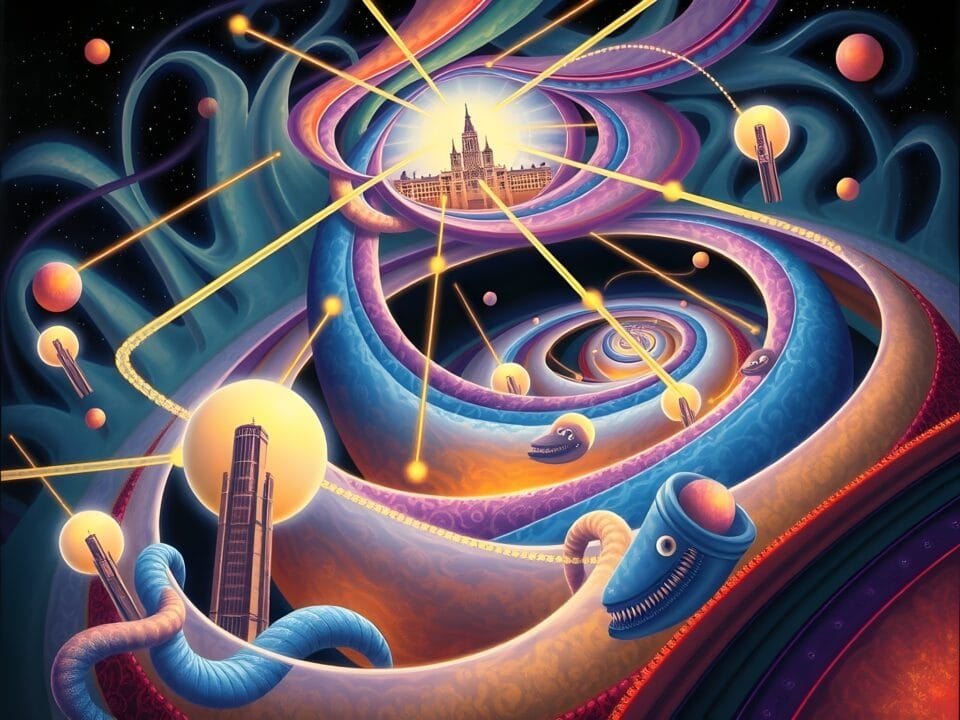
Seth: “A plane (and I am using your term, I will try to think of a better one) is not necessarily a planet. A plane may be one planet. But, a plane may also exist where no planet is. One planet may have several planes. Planes may also involve various aspects of apparent time. This particular matter is too difficult to go into right now. However, I will continue it later.
Planes can and do intermix without the knowledge of the particular inhabitants of either plane. I want to get away from the idea of a plane being a place. It may be in some cases. But, it is not always. A plane may be a time. A plane, believe it or not, may be only one iota of vitality that seems to exist by itself. A plane is something apparently divided from the rest of the universe for a time and for a reason. A plane may cease to be. A plane may spring up where there was none. A plane is formed for entities as patterns for fulfillment along various levels. A plane is a climate conducive to the development of unique and particular capacities and achievements. A plane is an isolation of elements where each element is given the most possible space in which to function.
Planets have been used as planes and used again as other planes. A plane is not a cosmic location. It is oftentimes practical that entities or their various personalities visit one plane before another. This does not mean that one plane must necessarily be visited before another. A certain succession is merely more useful for the entity as a whole.
In other terms, you could also say that an entity visits all planes simultaneously, as it is possible for you to visit one particular state, one particular county, one particular city at one time. Also, you might visit the state of sorrow and joy almost simultaneously and experience both emotions in heightened state because of the almost immediate contrast between them.
In fact, the analogy of a plane with an emotional state is much more valid than the analogy between a plane and a geographical state. Particularly since emotional states take up no room.”
Excerpted from The Early Sessions, Book 1, Session 16, January 15, 1964, © Laurel Davies
Prague, October 7, 2025
All images are artificial generated by Dirk Bosman and licensed under Creative Commons BY-NC 4.0