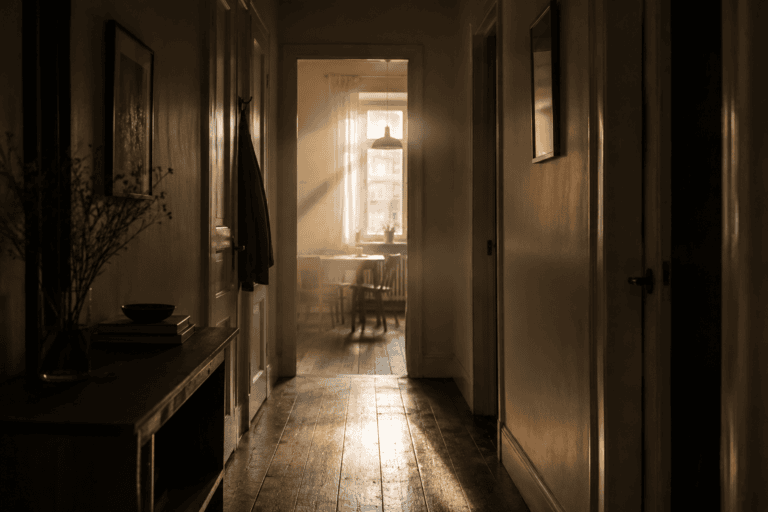
The world feels stable because so much of it repeats.
The same hallway in the morning. The same streets walked without really seeing them anymore. Familiar objects sitting in familiar places day after day.
After enough time, most things stop feeling interpreted.
They simply feel real.
And yet there are moments where that certainty shifts without warning.
A room entered countless times suddenly feels unfamiliar after certain news arrives. Time moves differently during fear. A street that felt ordinary the day before now carries a strange heaviness for no visible reason at all.
Nothing concrete may have changed.
But the experience of the world is no longer quite the same.
There are moments where the world suddenly feels unfamiliar for no clear reason.
A place remembered for years turns out to be smaller when seen again. A familiar street suddenly feels strange for a few seconds before everything falls back into place. Sometimes silence changes the feeling of an entire room almost immediately.
Nothing dramatic happens.
And still, something shifts.
Most people move past these moments quickly. After a while, things feel normal again.
But the certainty is no longer quite as complete.
Stability depends on more than the physical world itself.
Repetition matters.
The same places seen over and over begin to lose their strangeness. The same routines stop feeling chosen and start feeling inevitable. Even time becomes easier to move through once enough days begin resembling each other.
Most people rarely notice this happening.
The world simply becomes familiar enough to stop being questioned.
Once something has been named enough times, most people stop really looking at it anymore.
A chair becomes a chair so completely that almost nobody still experiences it as shape, color, texture, or presence anymore. Recognition arrives first. Seeing comes afterward, if it comes at all.
The same thing happens with streets, cities, roles, even people.
After enough repetition, reality becomes easier to recognize than to actually see.
And because billions of people continuously return to the same patterns together, the world gains an extraordinary sense of solidity.
And yet recognition is not the same as reality.
It is easy to forget this, because recognition happens so quickly. An object is known before it is really seen. A room is recognized before anything inside it is fully noticed.
It is also how the world becomes fixed.
Life needs some continuity. Without it, too much would feel uncertain.
So the world is seen in familiar forms.
But familiarity is not the same as truth.
It is only what has been returned to often enough.
We learn the names very early.
Table. Door. Street. Sky. Body. Home.
The world is given back to us through words before we ever question it. Others point, repeat, correct, confirm. Slowly, the same things become the same things for everyone around us.
This is necessary.
Without it, nothing would hold long enough to be shared.
But it also means that part of what feels real has been agreed upon so deeply that the agreement disappears from view.
A chair is no longer a shape given a name.
It is simply a chair.
A street is not a pattern of stone, light, distance, memory, and use.
It is simply the way home.
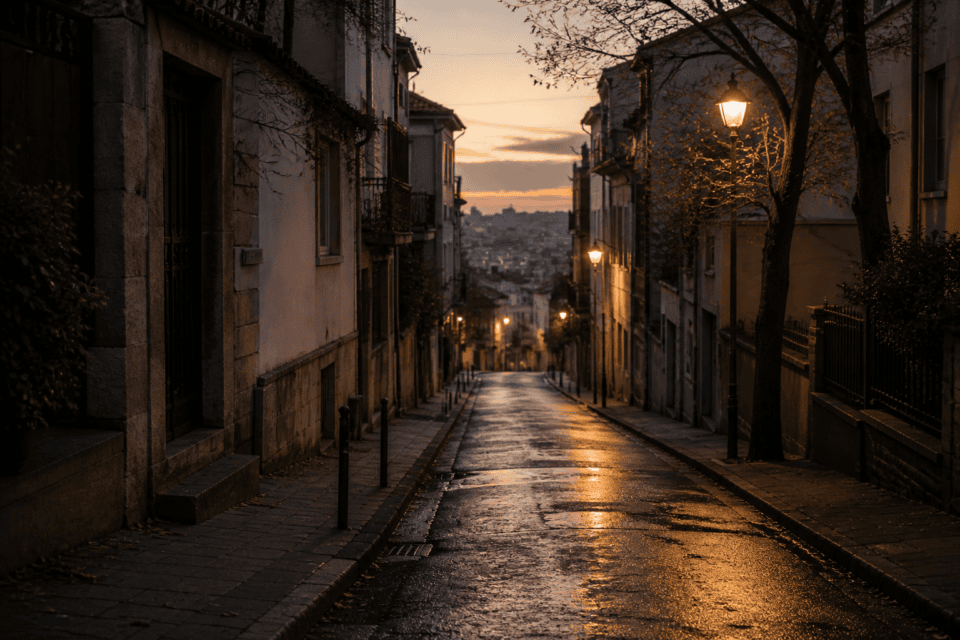
Much of what feels unquestionably real is held in place this way.
Not by one mind.
By shared certainty.
But the experience keeps moving.