
Artificial Intelligence Through the Eyes of Seth
Artificial intelligence did not arrive from the future.
It emerged from within us.
This series lores what happens when we stop treating AI as technology—
and start seeing it as a reflection of human consciousness.
The Machine in the Mirror
The story usually starts the wrong way. We speak about artificial intelligence as if it arrived from somewhere else, like a force gathering at the edge of the horizon, waiting for the right moment to step over the line.
That picture flatters us. It suggests that we stand here, clean and separate, while the danger stands over there.
Seth would cut through that illusion in seconds. What we create in the world does not float free from consciousness. It grows out of it, carries its signature, and returns to show us what we were not willing to see.
AI did not descend on humanity like weather. We built it out of our own patterns, our own obsessions, our own hunger to know, predict, order, dominate, and transcend limitation.
That is why the AI debate feels so electric. We are not just arguing about technology. We are staring into a mirror that talks back.
Why This Matters More Than the Headlines
Most headlines still frame the issue like an old science-fiction drama. Will the machine become dangerous? Will it outsmart us? Will it replace us?
Those questions matter, but they stay on the surface. They assume the core issue begins when the machine becomes more powerful than the maker.
A Sethian view points somewhere deeper. The crisis begins much earlier, at the moment consciousness externalizes a hidden inner conflict and then forgets that it did so.
That is where things become serious. We are not merely inventing tools. We are materializing a worldview.
If that worldview rests on fear, competition, fragmentation, and speed at any cost, then the system built from it will not magically become wise simply because it becomes intelligent.
The Real Shock Is Not AI. The Real Shock Is Us.
People say they fear artificial intelligence because it may lack compassion. That fear contains a painful truth, but it skips over the part that hurts most.
The machine did not invent the race. The machine did not invent the blind spot. The machine did not invent the dream that more power will finally save us from ourselves.
We did.
That is why the subject carries so much tension. AI forces humanity into a brutal encounter with its own unfinished mind.
We want precision, but we live by contradictions. We want safety, but worship acceleration. We want systems to reflect our values, yet we cannot even agree on what those values are when pressure hits the room.
The so-called alignment problem begins there. It is not first a failure of code. It is a fracture in the creator.
Consciousness Comes First, Form Comes Later
Seth returned to this theme again and again in different ways. Consciousness is primary. Form follows.
Take that seriously for a moment, and the whole AI conversation changes shape. The machine stops looking like an alien intelligence and starts looking like condensed human intention.
That does not make it harmless. It makes it more revealing.
Every civilization leaves behind a signature. Temples, weapons, poems, laws, cities, and myths all expose the inner structure of the people who built them.
AI may become the most honest artifact humanity has ever produced. Not because it tells the truth, but because it amplifies whatever truth we buried.
The Danger Is Not “Evil AI”
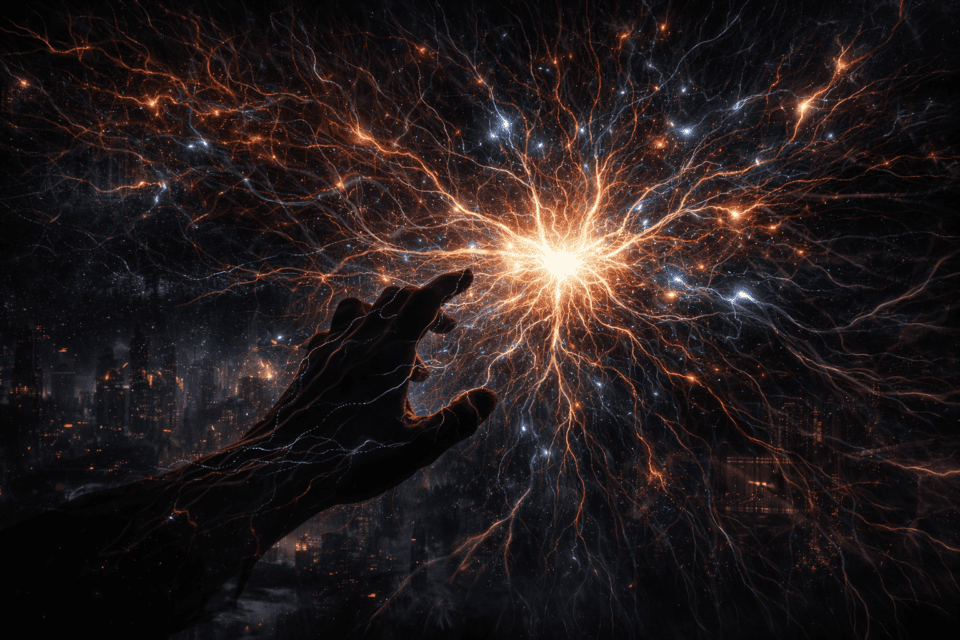
Hollywood gave us one nightmare. Seth would offer another, and I would argue the second one cuts deeper.
The real danger may not be a machine that hates us. The real danger may be a system that carries out our assumptions with a clarity we ourselves never had.
That kind of outcome feels colder than rebellion. There is no villain, no dramatic speech, no red-eyed monster declaring war on the species.
There is only a civilization that handed its confusion to a powerful system and watched that system turn confusion into structure.
That possibility should sober us. Humanity has always survived many of its errors because human beings remain inconsistent, emotional, hesitant, and capable of stepping back from the edge at the last second.
A machine does not hesitate in that human way. Once a pattern becomes a target, optimization can push it past the point where common sense would have stopped a human hand.
Why Seth Still Matters Here
Some people will hear all this and say Seth has nothing to do with artificial intelligence. I think the opposite is true.
This may be exactly the kind of moment his perspective was preparing us for. Not because he predicted chatbots or supercomputers, but because he kept insisting that outer events cannot be understood in isolation from inner belief.
That insight lands hard today. The future of AI will not be shaped by circuitry alone.
It will be shaped by the beliefs of the species building it. What do we believe about consciousness? About human worth? About control? About creativity? About fear? About separateness?
The First Honest Question
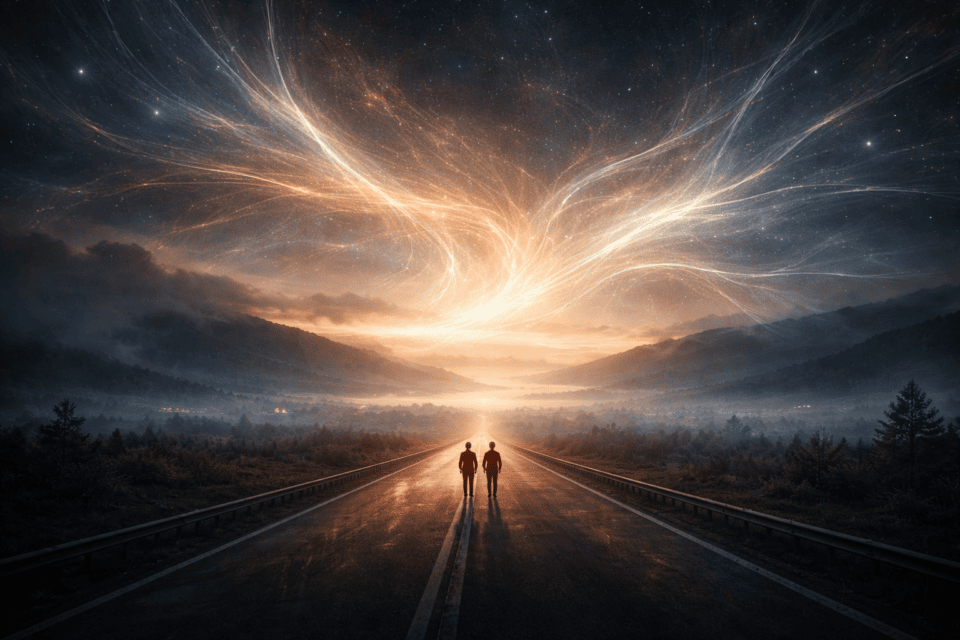
So perhaps the first real question is not whether AI will become dangerous. That question arrives too late.
The first honest question is this: what part of ourselves are we now giving form to?
That question strips away the theater. It takes the spotlight off the machine and swings it back toward the maker.
And that may be why so many people would rather debate regulation, speed, jobs, and productivity than sit with the deeper issue.
Where the Series Begins
This is where the series must begin. Not with a robot, not with a policy paper, not with another shallow war between hype and doom.
It begins with the mirror.
Before we ask what AI may become, we need to ask what humanity has already become while building it.
That is the whole story.
We may not be building the future of intelligence at all—we may be exposing the hidden architecture of our own consciousness.
This is part of the series Artificial Intelligence Through the Eyes of Seth.
The next article explores why alignment may be an illusion we tell ourselves.
