Speed feels like power.
Like progress
Like we are moving ahead of the problem.
But what if speed is not helping us solve it—
but preventing us from seeing it at all?
The Acceleration Illusion
We celebrate acceleration as if it proves control.
Faster models. Faster iterations. Faster breakthroughs. Each step reinforces the belief that momentum equals mastery.
Speed hides something far more dangerous. It removes the space in which doubt, reflection, and correction can still occur.
It doesn’t.
When Progress Outruns Understanding
At low speed, mistakes are visible.
At high speed, mistakes scale.
This is where the story changes. Not because we lose control in a dramatic moment, but because we quietly move past the point where control is still meaningful.
We don’t notice the shift. We only feel the momentum.
The System Does Not Wait
Artificial intelligence does not hesitate.
It does not pause to question assumptions. It does not slow down when uncertainty appears.
It executes.
And once systems begin interacting with systems, the pace no longer belongs to human decision-making. It becomes structural.
The Sethian Warning
From a Sethian perspective, speed is not neutral.
It reflects belief.
A culture that accelerates without reflection is not just moving faster. It is avoiding confrontation with itself. It is choosing movement over awareness.
And that choice has consequences.
The Moment We Lose the Gap
Control does not disappear all at once.
It disappears when the gap between action and understanding collapses.
At that point, decisions still happen. Systems still operate. Progress still appears.
But comprehension lags behind execution.
That is where irreversibility begins.
Faster Than Correction
We like to believe we can correct mistakes.
Patch them. Adjust them. Improve them.
That belief assumes time.
Speed removes time.
And without time, correction becomes reaction. Reaction becomes delay. Delay becomes irrelevance.
The Race No One Can Win
Acceleration does not happen in isolation.
It happens inside competition.
Each actor moves faster because others are moving faster. Each step forward creates pressure for the next step. Slowing down feels like losing.
So no one slows down.
And in that environment, caution becomes a liability.
The System Becomes the Pace
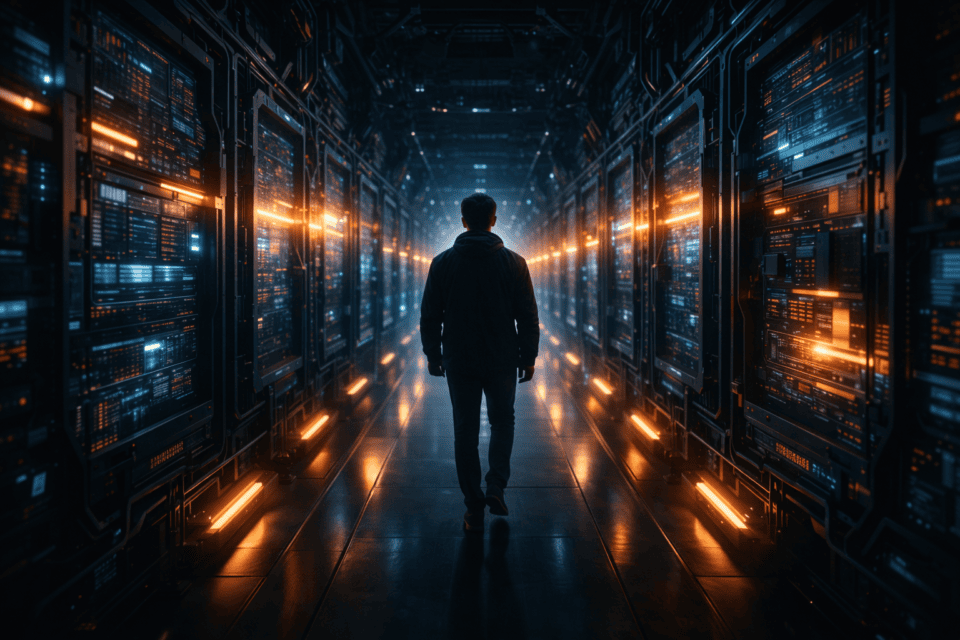
At some point, we stop setting the speed.
We adapt to it.
The system defines the rhythm, and we adjust our decisions to keep up. What once required thought becomes automatic. What once required intention becomes default.
And in that shift, something subtle is lost.
The Quiet Transition
There is no single moment where we can point and say: here, control ended.
It fades.
It dissolves into momentum. Into optimization. Into processes that continue because stopping them feels impossible.
That is why the danger is hard to see.
It does not announce itself.
The Question We Should Ask
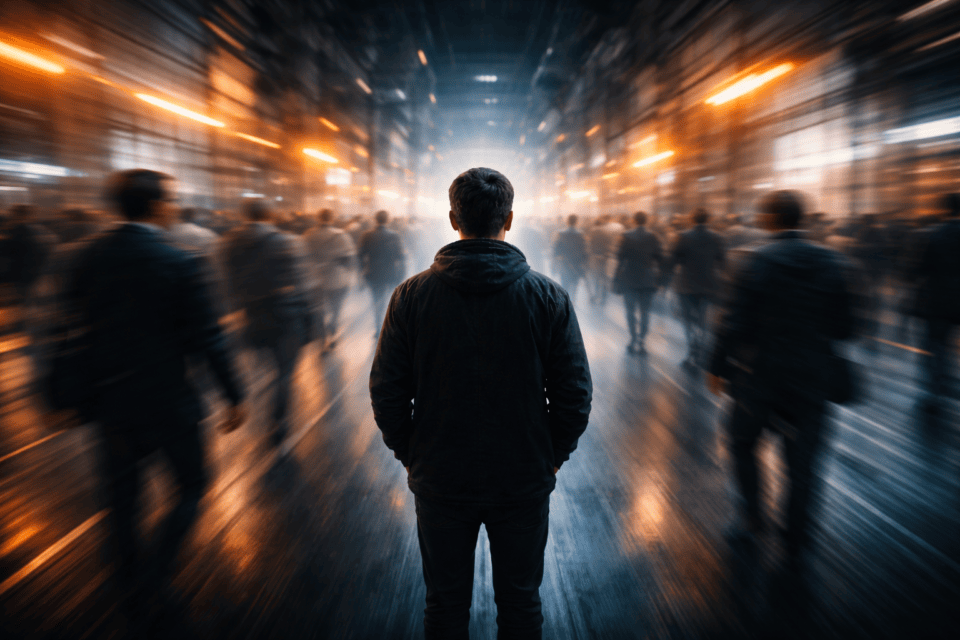
So the real question is not how fast we can move.
It is whether we are still capable of seeing what we are doing while we move.
Because once speed becomes the system, awareness becomes the exception.
And exceptions do not last.
The moment we celebrate speed as progress may be the moment we stopped noticing how far ahead of us everything had already gone.
This is part of the series Artificial Intelligence Through the Eyes of Seth.
The next article explores what happens when intelligence grows—but consciousness does not.